
We may think nothing much moves around in winter, but with a little detective work, we can find lots of activity within our respective areas. Few animals truly hibernate over the winter and the snow makes it easy for us to spot animal tracks. But whose tracks are they? Tracking is a fun activity for you and the kids and having a small book like a Peterson Field Guide will help you to put a name to those footprints! Take a small notebook with you to record what you find and where you find it.
Deer


Easy one first! Probably everyone can spot deer tracks, after all the cloven hoof is a dead giveaway. With practice, you can become quite adept at determining the size and approximate age of the deer. Hunters use tracks to determine where the best hunting areas are.
Squirrel & Rabbit


Squirrels and rabbits can be hard to tell apart. The following video does a great job of explaining the difference.
Opossum
 o

*Tracks photo courtesy of Critter Control
In the post about opossums, we mentioned the opposable thumb of the hind feet. This makes for quite a distinguishing footprint – if it is clear enough. When opossums walk, they tend to step into the previous print, making the front and back print look very strange indeed!
Raccoon

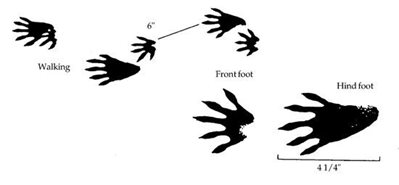
*Tracks photo courtesy of Critter Control
The furry trash panda is a common sight. Its tracks are fairly easy to distinguish when you have a clear print.
Coyote


*Tracks photo courtesy of DEC NY
Another simple one. Dog sized footprints; toenails point visible. Usually the size of a medium/large dog. The print of a coyote is much more compact than that of a dog.
Otter


Otters have a distinct method of travelling distances in the snow or mud. They will gather speed and then slide along on their bellies – telltale sign! This playful creature can cover a lot of ground using this method. You may spot slides down the river bank into the water.
Mice/voles/shrews


Mice and voles make tunnels under the snow. Despite being small, the rodents are too heavy for the snow to support them and it is much less work to dig a tunnel.
You can spot them as meandering raised lines in the snow. When the snow collapses, the tunnels become apparent. You may find small footprints in areas of sparse snow coverage. There are many species of mouse/vole/shrews to be found and recognizing them is an art.
Fox


Fox prints can be tricky and will require a bit of practice! They can be confused with dog or coyote prints at times.
Bobcat


This video clip shows nicely the difference between cat and dog tracks.
There are several more to be found, not including birds. Happy tracking – how many species can you find out there?


