
Spring is here and we will soon hear the springtime chorus of peepers. What are peepers and where can we find them?
These tiny frogs are quite small, measuring between one inch and an inch and a half and hidden in their natural habitat can be difficult to find. Not difficult to hear though!

photo courtesy of Be Green Pro Blog
When they are in full chorus, they are very loud. The chorus begins around March, when the weather warms up and will continue through into June. As you may surmise, the chorus is the mating call of the males, hoping to attract a mate and is mainly heard in the late afternoon and night time.
The “call” is made by inflating a large sac under the chin of the male and expelling the air in bursts.

photo courtesy of New York State parks and History Sites Blog
FUN FACT: The boys can call up to 13,500 times a night – impressive!
The females are picky about a mate. They listen for the boldest, loudest callers, preferably from their own lineage.
She will lay 900-1000 eggs at pond margins, preferring permanent ponds to vernal ponds. From these eggs, the tadpoles will emerge and live in the pond for two to three months feeding on dead organic matter.
When they are grown, they will emerge and vanish into the vegetation of the woods. Adult peepers feed on beetles, ants, and other small invertebrates. Peepers have a life span of about three years.
Peepers (pseudacris crucifer) are able to overwinter as its body secretes an “antifreeze” that allows it to survive dormancy over the winter months.
These little frogs are great at camouflage! Their general coloration is anywhere between brown, tan, green to olive green or grey. They have a dark X on their backs, while the bellies are white/cream colored. So, they blend in extremely well with their surroundings looking much like the bark of a tree.
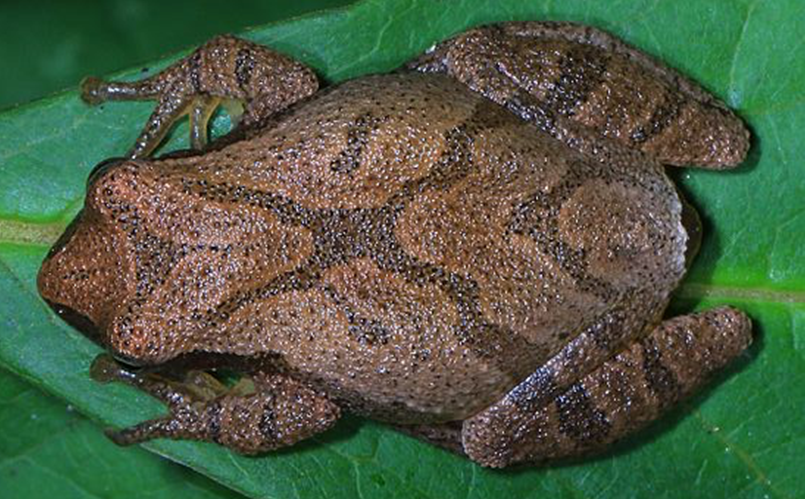
photo courtesy of Wikimedia
Coloration is affected by temperature and the amount of light they receive. And can be adapted quickly to avoid predators.
FUN FACT: They can alter their coloration quite quickly – with 15 minutes, much as a chameleon can!
While they are more at home on the forest floor, they are able climbers thanks to their large and sticky toe pads. We often see them attached to our doors and windows after a heavy rainstorm.
They have many predators – the tadpoles falling victim to larger frogs, salamanders, herons, and snakes. The adults are taken by snakes, skunks, foxes, and numerous other species looking for a snack.
Peepers are widespread throughout the eastern states of the US and Canada and are not considered to be as an endangered species, but like all riparian creatures, they can be adversely affected by chemical/pesticide run-off into rivers, streams and wetlands.
https://www.nwf.org/Educational-Resources/Wildlife-Guide/Amphibians/Spring-Peeper


